
It is the season for travel. Whether you are taking a long road trip to visit family or flying via plane, earthing can help combat travel fatigue and keep inflammatory pain away.
Here are a few ways to do it.
Earthing or Grounding to a car or plane
Sitting in a car or plane is a lot more tiring than sitting on a sofa.
That’s because when we are travelling our bodies are subject to constant vibrations and micro-movements (against the seat) that create static electricity. The build-up of static electricity can contribute to travel fatigue, aches and pains.
Grounding allows your body to gently release these static charges by ‘grounding’ your body to the metal body of the vehicle. Note: this is not the same as earthing where free electrons travel from the earth’s surface into your body. The chassis of the car or plane acts as a relative ‘ground’ to release static electricity from your body only.
Avoiding static build-up is valuable for reducing fatigue and travel aches.
People generally find that they have less tension and tiredness when grounding whilst travelling, according to an informal study by the Earthing Institute of truck drivers who used a grounding auto seat pad.
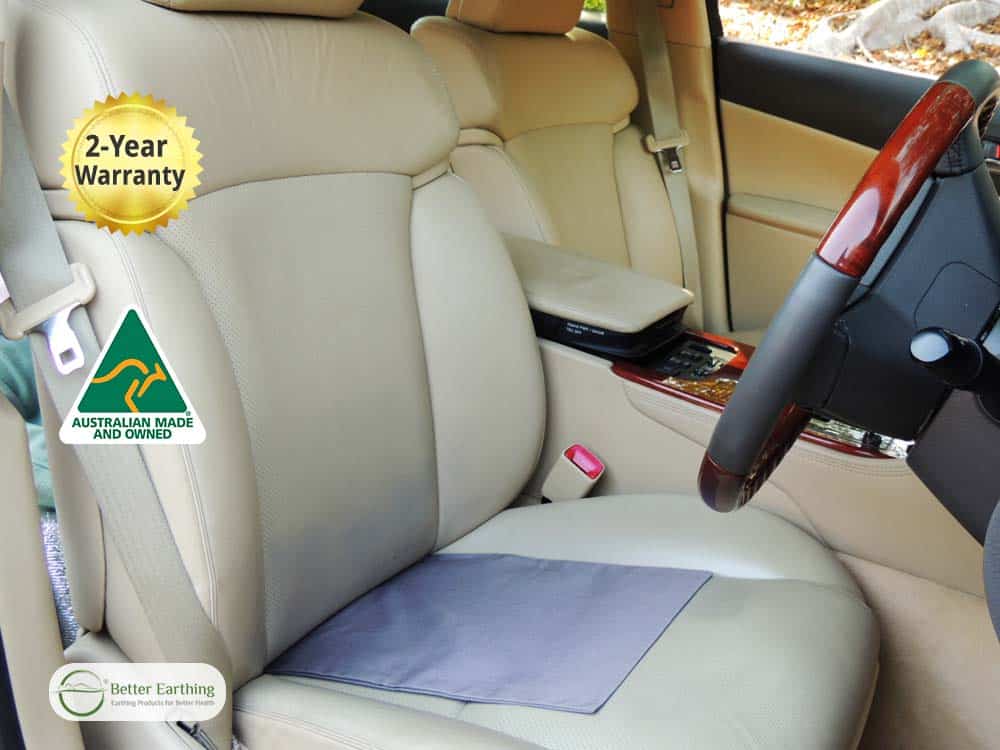
On your next road trip, fit your car with a better earthing auto pad and see if you notice less fatigue or general aches.
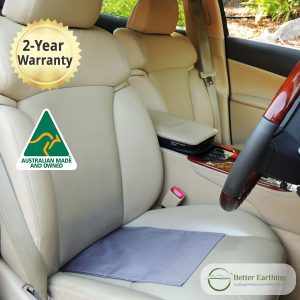
If travelling by plane, you can discharge static build-up by making conductive contact with the metal seat frame in front or below you. Place your bare foot or heel on the metal part of the seat in front. Or, alternatively, attach your earthing lead (with a small earthing product like an earthing band, wrap or auto seat pad) to the metal frame using an alligator clip or sticky tape. This will reduce the build-up of static electricity in your body and make for a less tiring flight.
On Arrival – Rebalance with a Barefoot Walk
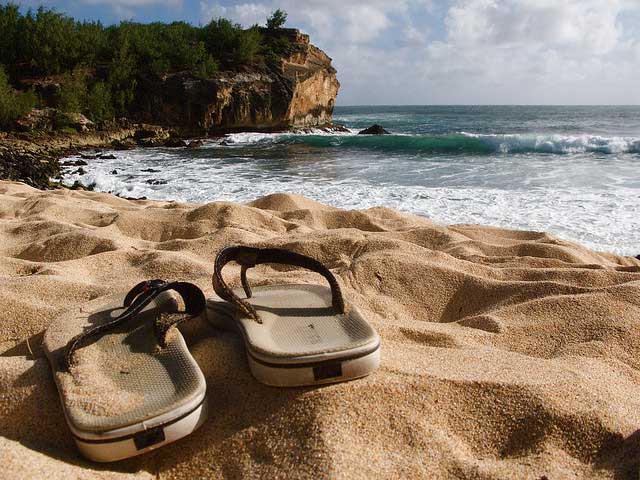
After a long journey, one way to reduce the effects of travel fatigue is by taking a 20-30 minute barefoot walk on the grass or at the beach (weather permitting).
While no research has been done to prove this effect, there is plenty of anecdotal evidence about earthing and jet-lag. Here is one experience.
Last summer I read the Earthing book on the plane to Europe. When I arrived at my destination I had been awake for 20 hours, and was 10 hours jet-lagged as well. During the afternoon of the following day, I took the opportunity to try this new concept of earthing that I had just been reading about…I walked to the city park, found a quiet spot and lay down face first in the soft grass. I fell asleep for about 30 minutes, and woke up feeling really refreshed. I slept straight through the night that next night and did not have any jet-lag at all. Just to be sure I tried the same thing on my return home three weeks later! I took my shoes off and sat barefoot on the grass for about 45 minutes during the afternoon of the first day back, when I was feeling particularly groggy (it being 4 am for my body). I began to feel much more alert, and stayed awake without difficulty until it was time for bed (local time).
~ Karen B
Earthing While Camping or Caravanning

How often do you go barefoot when camping? If you’re like me it is almost never.
We’re used to communing with nature with our eyes and ears, but we rarely touch the earth with our bare feet.
You can earth in the great outdoors without getting your feet dirty.
One solution is to strap on some shoe heel earthers on your hiking boots or shoes. You will likely feel more energised and less achy at the end of your walk.
When you return to your tent or caravan for a rest, you can earth there too using an indoor earthing product (such as a mat or pad).
If you don’t have an earthed/powered site, you can plug your product into a grounding rod.
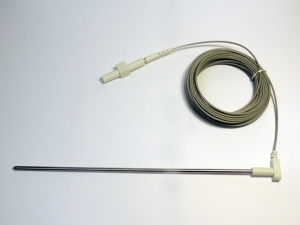 A grounding rod is a light-weight metal stake, 30cm or more in length, which, when staked in the ground, passes the earth’s health-enhancing free electrons through to your earthing product.
Stake the grounding rod into the earth and attach your earthing product to the outdoor lead provided. No power point is required and you can connect two or more products with a splitter or 4-way splitter box.
There’s nothing quite like sleeping out in the great outdoors with the clean fresh air, the stars above, and the earth’s energy flowing through you.
Earthing in Hotels Overseas
While many of us are restricted to travel within our home country due to Covid, it is handy to bookmark the following info for when you’re able to holiday overseas freely again. It isn’t always possible to earth via the power point.
Many buildings in Europe and Asia have powerpoints that are not earthed.
One solution is to earth via a tap or water pipe in the bathroom or kitchenette.
Almost all metal taps and metal water inlet pipes found under kitchen, bathroom and laundry sinks are earthed. This is why:
- All buildings have a continuous water pipe system travelling from the earth/ground to your tap.
- Both the metal pipes and the water inside them are conductive and conduct free electrons from the earth. If some part of the water supply piping is plastic, the water inside will provide the conductive earthing connection.
To earth via the tap, take a look at this video.
The most important thing is to make good metal-to-metal contact between the metal end of your earthing lead and the metal tap or metal pipe underneath the tap (under the sink). You can use sticky tape to press the metal end of the lead against the metal tap or metal pipe. DO NOT USE BLUE TACK (as shown in video), as it does not maintain a secure connection. If you need extra length for your earthing lead to reach the tap, we have a 10m extension lead (and splitters to connect more products).
You can also confirm that the tap or metal pipe is conductive for earthing with an autorange multimeter.
Wherever you are travelling this season, try one of these ways of earthing and see if reduces your travel fatigue. You may find you have more energy for the fun stuff.